Issue 04 · Essay / Place · Folio 04.01
When the Room Listens
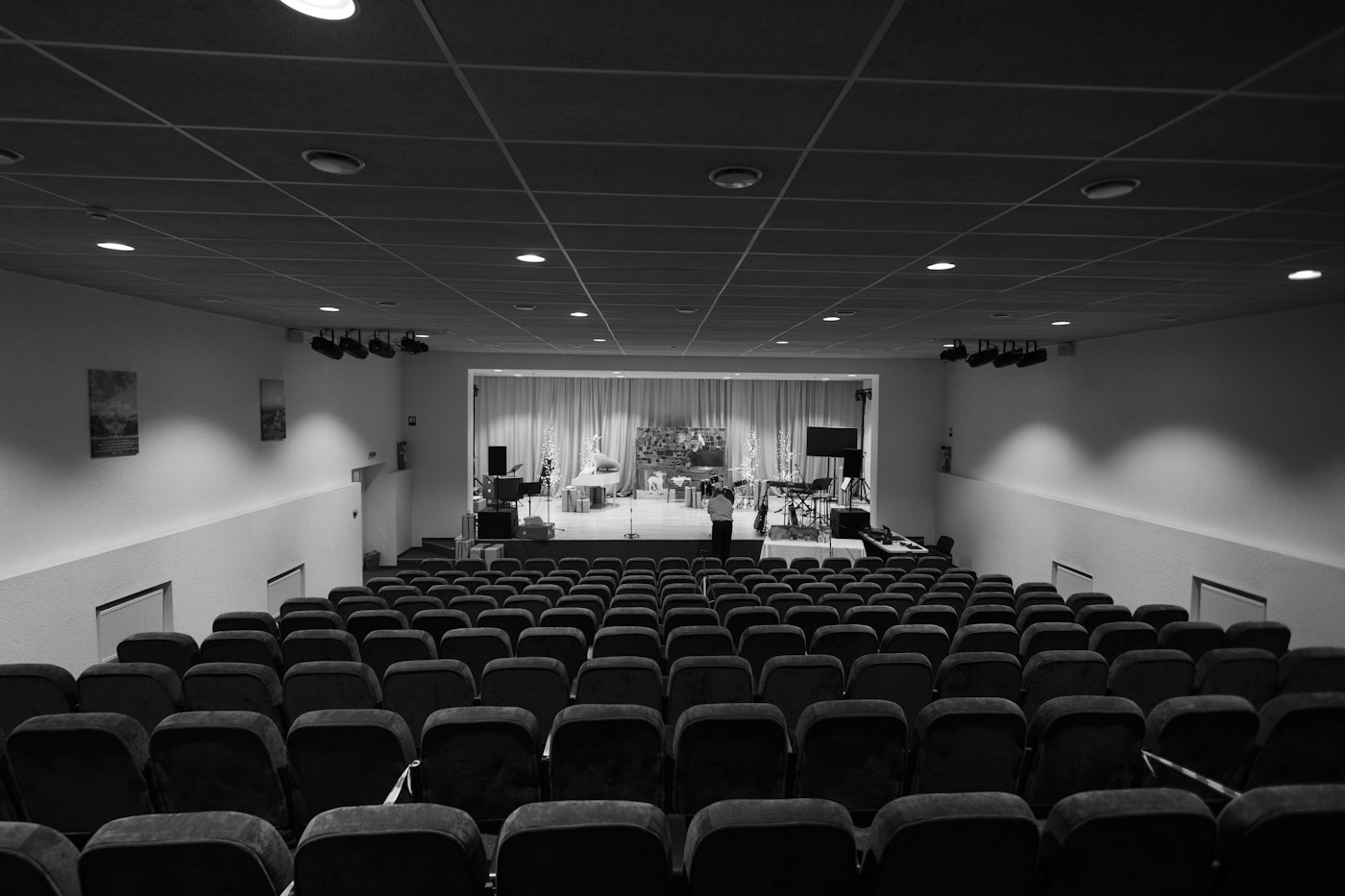
The room decides before anyone speaks. It decides in the gap between chairs: whether a knee will brush a stranger’s coat, whether a laugh has somewhere to land, whether the person at the back is in the gathering or merely adjacent to it. Architecture is often discussed as form. In small cultural rooms it is closer to etiquette. The walls do not make a program. They make a set of permissions.
A stage six inches high is not the same instrument as a stage three feet high. The lower edge is almost comic. It says: we are pretending, and we are not pretending very hard. The higher edge is a small cliff. It asks the neck to agree that something has begun. Neither is more honest. Each simply trains the body, and the body trains attention. You can feel the difference in the first thirty seconds, before a single cue has been called.
Imperfect acoustics are a kind of hospitality. A room that swallows every syllable can make a crowd feel professional and slightly lonely, as if the sound has gone to a more important appointment. A room that returns a voice with a smear of echo makes the speaker audible as a body. You hear breath. You hear the scrape of a chair that should not have moved. You hear that other people are hearing. Shared sound is one of the oldest proofs that a public still exists.
Belonging in such a place is brief and specific. It is not membership. It is the feeling that, for forty minutes, your attention is useful to other people.
Silence works the same way. In a well-tuned hall, silence can be displayed like a polished object. In a borrowed storefront, with traffic still arguing at the glass, silence is a temporary agreement. It has to be made, minute by minute. That labor is part of the art, even when no one names it. The delayed laugh, the person who finds the door in the dark, the cough that arrives exactly where a sentence was thin: these are not interruptions so much as evidence that the room is occupied by more than one will.
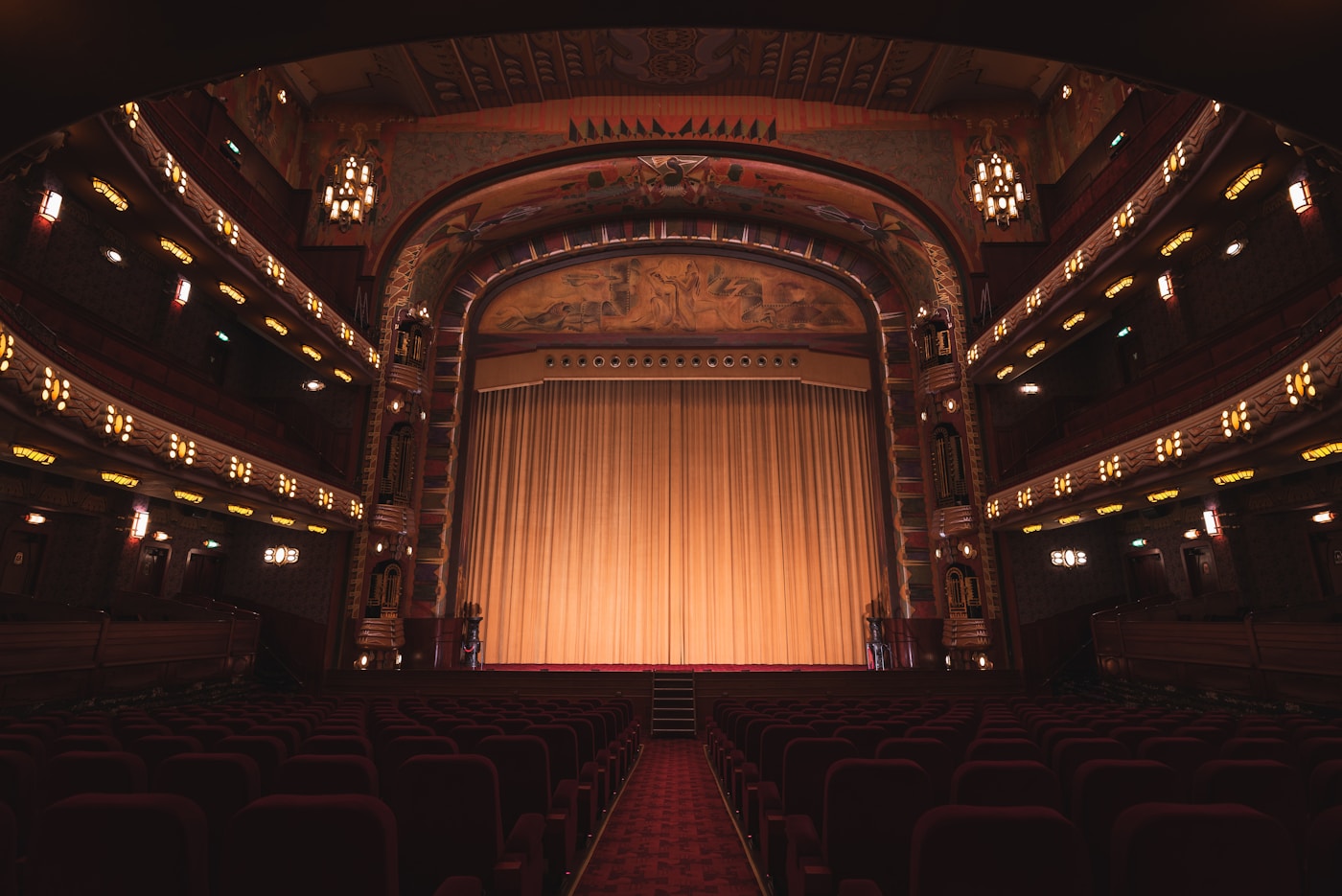
Distance is never neutral. Too much of it and the audience becomes an illustration of itself—rows of faces arranged for a photograph of culture. Too little and the work has nowhere to stand. The useful interval is slightly uncomfortable. You can see someone swallow. You can be seen changing your mind. Participation, in these rooms, is often just the decision not to look away. That is a small bravery, and it is contagious in a way applause is not.
Temporary venues understand this better than permanent ones, perhaps because they have not had time to become scenery. A rehearsal studio with taped marks on the floor is already a map of intention. Folding chairs in a basement, a microphone that arrives in a grocery bag, lights that are really clamp lamps: none of these are failures of production. They are statements about what is enough. Enough, here, means the gathering can begin before an institution arrives to name it.

Belonging in such a place is brief and specific. It is not membership. It is the feeling that, for forty minutes, your attention is useful to other people. You hold still so a sound can finish. You lean so a sightline can remain. When it ends, the room returns to being a room: scuffed, too warm, smelling faintly of wet coats. The memory that remains is not only of what was shown. It is of having been arranged, for a short time, into a public.
Culture moves in these arrangements before it has a vocabulary. A poster goes up. A rumor of a time. A door left unlocked. People bring their bodies into a geometry that was not designed for them and, by sitting, redesign it. The chairs remember the weight. The floor remembers the path to the exit. The next gathering inherits a faint instruction: here is how close we stood. Here is how quietly we agreed to begin.
This is not an argument against better rooms. Light should not injure. Sound should not punish. Access is not an aesthetic, and a charming inconvenience is not a substitute for a ramp. It is only to say that the small cultural space is not a lesser version of the theatre. It is a different instrument. It plays attention at a shorter distance. It makes participation visible because there is nowhere for it to hide. If the night works, you leave with the odd sensation of having been included in a shape—not a crowd, not an audience exactly, but a temporary figure made of people and air and the stubborn fact of a room that listened back.